Review
Imagine all the collisions possible between two celestial bodies in a cosmic multiverse.
Like billions of barren souls these relative specks of dust circle each other on a coincidental trajectory, knowing not what they seek, just hoping to find a comfy place to crash for the night. Sometimes they might pass each other on their respective life orbits, missing each other by thousands of kilometres, which in space terms would be a near miss.
Other times they might glance off each other as they collide, accidentally bumping shoulders in the crowded bus terminal, or in the queue going into the concert, before they veer off in opposite directions.
And on other occasions they might strike each head-on at full force, causing a catastrophic disruption whereby both asteroids completely shatter, leaving broken hearts and dusty memories dissipating forlornly in the astral ether.
This is a real thing.
In life as it is in the cosmos, sometimes two lives change irrevocably when they collide. And sometimes they don’t.
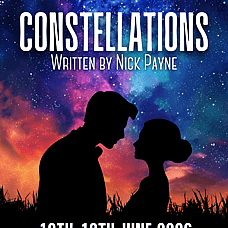
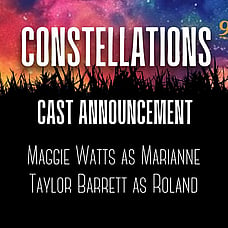
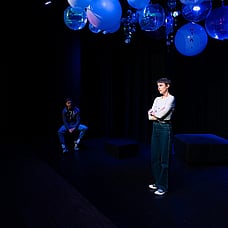
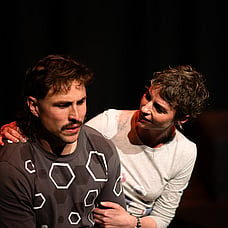
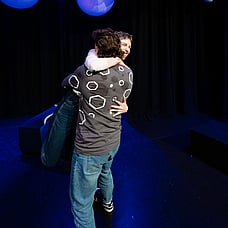
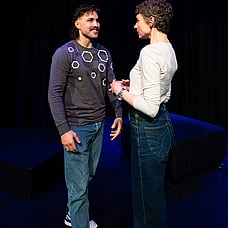
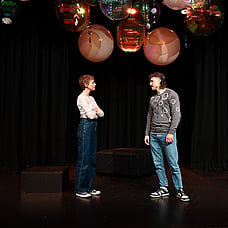
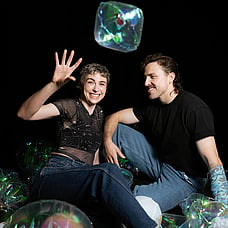
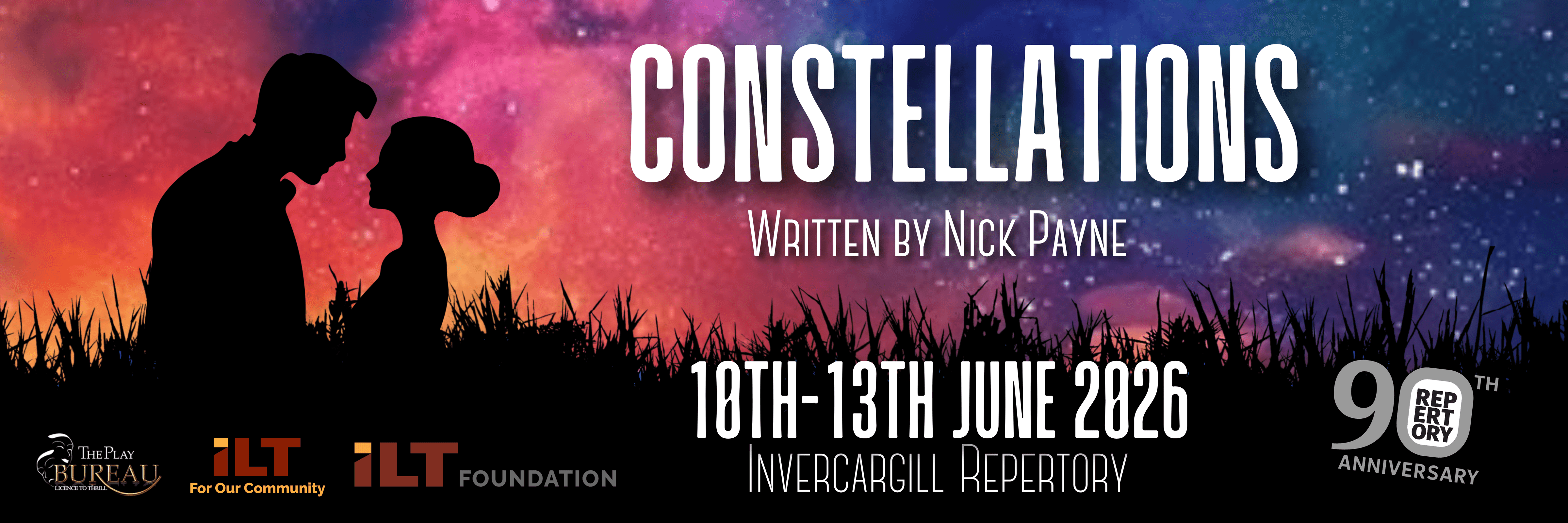
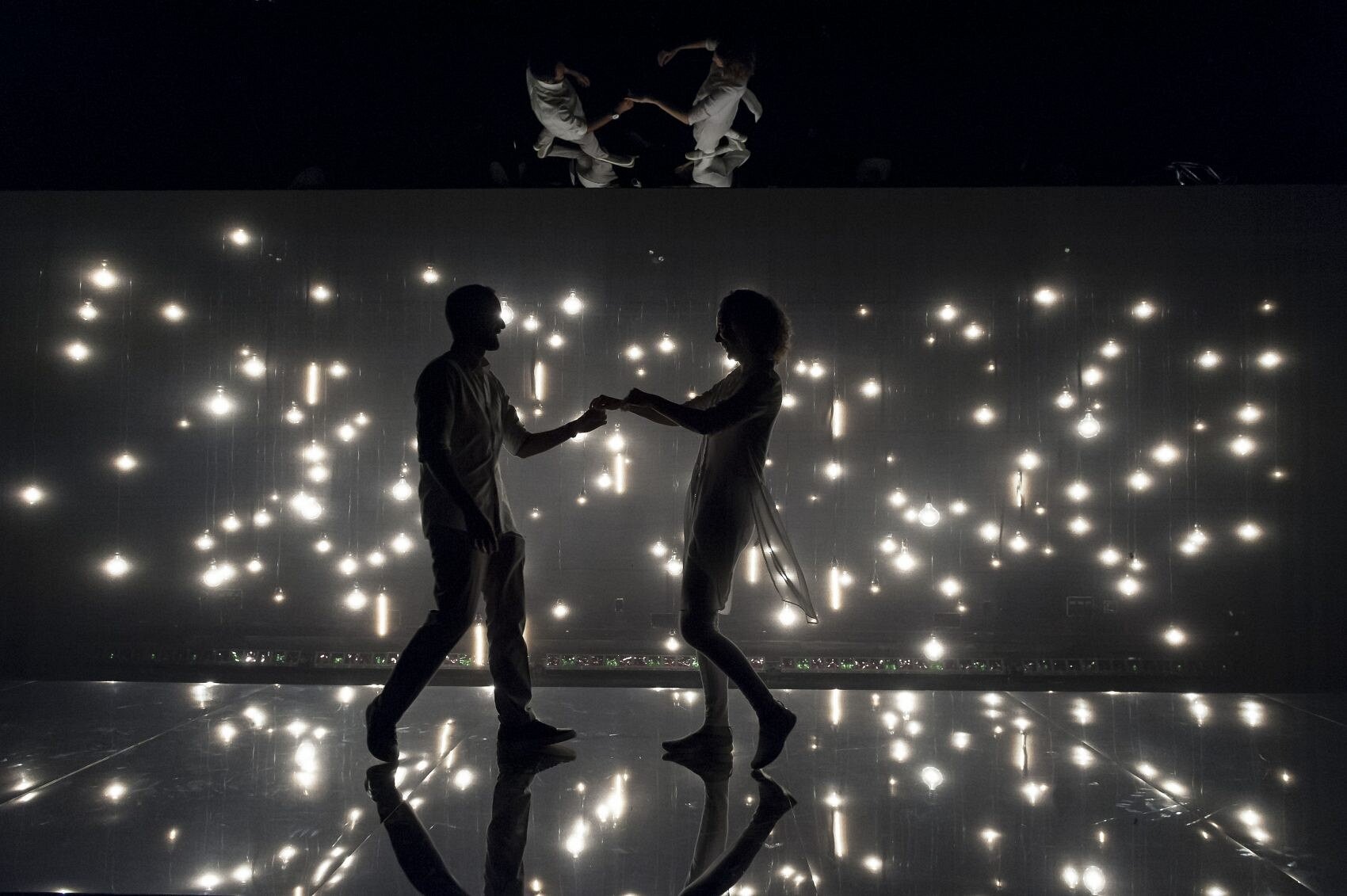
Constellations is an intelligent, challenging, rewarding play that examines some of the many possible permutations when two souls find themselves colliding on the same orbital plane. The protagonists – physicist Marianne (Maggie Watts) and beekeeper Roland (Taylor Barrett) – meet at a barbecue and from that moment their destinies follow multiple paths, some of which see them together as partners, and some that don’t.
Constellations’ challenging script requires impeccable timing and immense range from its two characters, who are on stage for the full hour without a break.
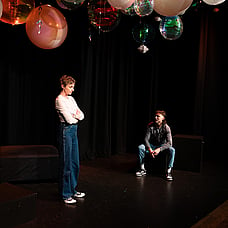
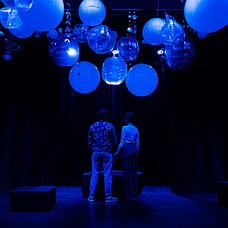
The pace is set from the start, where multiple scenarios are played out during a conversation that’s the same but plays out differently each time it’s repeated. Each reimagining of a scene is delineated by the barely perceptible ring of a little bell, a deft directorial touch from Aimee Marshall, coupled with a change in lighting.
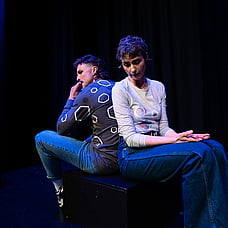
The actors masterfully adopt a different posture, pitch and position to define the mood of each micro-scene. In the space of just seconds they reset to display either familiarity or distance.
There are massive theatresports chops on display here, but marvelling at the space jump skills is doing a massive disservice to the depth and complexity of the play, the players, and the director.
Both Watts and Barrett are quite extraordinary in their treatment of the source material, which is emotionally harrowing as it veers at speed from funny to tender to viscerally raw.
Not gonna lie. One scene broke me. There were tears. Many people may also find something deeply familiar in this wonderful piece of theatre and come away from it changed in some way by what they’ve just witnessed.
Here in Invercargill, in our microscopic slice of the multiverse, and probably in many others, this is as good as theatre gets.
Chris Chilton